

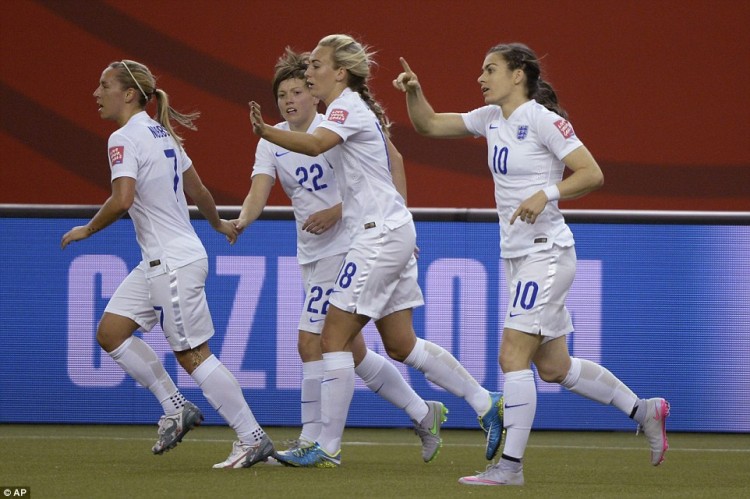
Women’s football, whilst rightly remaining a constant component within the overall sport in general, seemingly never ceases to detach itself from recycled comparisons to the men’s game and subsequent criticisms in standard.
Obviously it’s a branch of football that simply won’t be able to match the week-to-week excitement developed by the Premier League any time soon – that much simply goes without saying. Because of the lack of all-round quality within the women’s game, and resulting limited popularity of the sport, women’s football ultimately has a very long way to go before it can truly rival the sensation of their male counter-parts.
Even with that in mind however, there is no reason to suggest that that the sport can’t develop dramatically in the next few years or so. Thanks to the advent of YouTube, extra television coverage and the overall availability of matches on the internet these days – women’s football has certainly received an upturn in support this year. That much was evident throughout the 2015 Women’s World Cup in Canada in recent weeks.
England’s Lionesses achieved an admirable third place finish following their semi-final exit to Japan – and although Mark Sampson’s team didn’t win the tournament outright this year – they nonetheless reached a level than the men’s England national team could only really dream of achieving in the modern era.
Women’s football therefore provided the nation with a fairly new feeling of pride on the international front in 2015, and that is an area that the men’s game has fallen dramatically short in across the past few World Cup offerings.
So, in light of the recent developments across the English women’s game – does the popularity of football already feel well spread within the sport as it stands, or does women’s football actually deserve more recognition for its achievements in the modern era?
The word ‘deserve’ has always remained a pretty elusive one within the world of modern day football. Unless a team’s fate happens to fall in either the success, tradition, or quite frankly obscenely rich categories currently circling around the sport today – clubs invariably often don’t receive what most believe they deserve.
And that seems to be where women’s football enters the debate. There is no doubt that the women’s game means just as much to those involved. From the managers and coaches on the side-lines, to the players out on the pitch and the supporters in the crowd, women’s football certainly has the capacity to impress fans of the sport in general, whether or not most would care to admit it.
We saw from the 2015 Women’s World Cup that, although the overall quality obviously has some pretty restricting shortcomings, certain stars within the women’s game definitely know how to put on a show. The USA eventually won the tournament outright in deserving style in the end – and with the likes of Carli Lloyd managing to score several goals in the final with some pretty sublime efforts at that – it should perhaps come as no surprise that the Americans proved victorious come the culmination of the competition.
Football fans from all walks of life enjoy watching well-worked plays, ambitious shots from within the final third, and dazzling set-pieces that would leave even the very best defenders in the modern game feeling second best. The 2015 Women’s World Cup provided all of that and more, and deserves great credit for doing so.
However, when it comes to raw intensity, defensive organisation and faultless fitness across the whole 90 minutes – women’s football is ultimately lacking a great deal. The matches may have their moments of glory that no fan could really discredit, but between such exciting episodes, the play very rarely manages to captivate in all honesty.
Without wanting to put the sport down in its entirety, the ball in women’s football seemingly doesn’t remain out on the field for many sustained periods of time, and as for the goal-keepers tasked with keeping shots out the back of the net – perhaps the least said about them the better.
Women’s football potentially has a bright future ahead of it, especially after the 2015 World Cup in Canada, but ultimately serious work needs to be done on the training pitch before it can actually be considered worthy of rivalling the men’s game.
As women receive only a fraction of the investment, promotion and overall hype that the men often get in abundance with every passing season however, perhaps that should come as no surprise.
Maybe it’s fair to say then – that when the money starts readily flowing through the women’s game without much second thought, only then will the overall popularity and quality of the sport finally start to follow.

Thatsagoal.com Team
Latest posts by Thatsagoal.com Team (see all)
- Boxing Day Competition to Win A Share of £772.40 from thatsagaol and bet365 - December 22, 2016
- Boxing Day Enhanced Odds Offers for Betting on the Premier League - December 22, 2016
- Everton vs Liverpool Enhanced Odds Bets for New and Existing Customers - December 19, 2016
- Premier League Football Accumulator for Tonight to win £180 from £10 - December 14, 2016


Follow us