

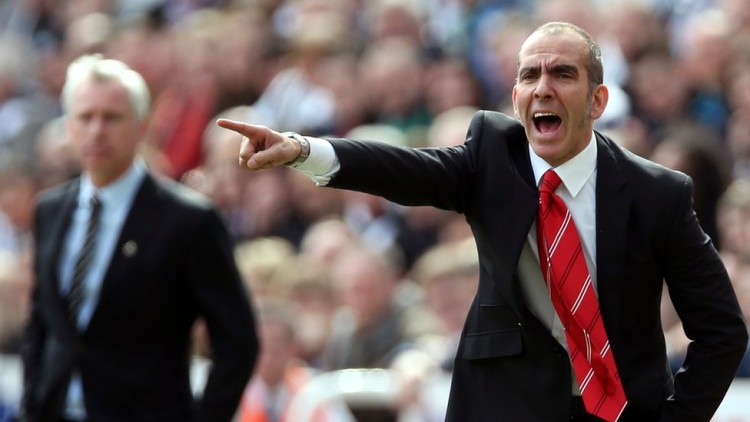
Paolo Di Canio’s short-lived managerial stint at the Stadium of Light certainly didn’t pass without its fair share of controversy to say the very least. In reality, the fiery hot-headed Italian likely made supporting a club like Sunderland far more eventful than it possibly would have been in seasons past.
Be it through publically criticizing his players in post-match interviews, boldly addressing the fans inside the stadium after a series of difficult losses, or simply sliding on his knees when his side proved triumphant in the Tyne-Wear derby – Di Canio is a man who ultimately doesn’t arrive without bringing at least some form of excitement to the English top-flight.
However, despite his grand plans to turn Sunderland into an outfit worthy of making the top ten every season, the former West Ham striker was eventually sacked from his position with the Black Cats less than ten games into the 2013/14 campaign.
So then, although Dick Advocaat is obviously now in charge of the everyday comings and goings at the Premier League club, would Sunderland actually be in a stronger position today had they not sacked Paolo Di Canio just a few short seasons ago?
The answer could well be, yes.
Whilst the name ‘Paolo Di Canio’ probably won’t be at the forefront of most Sunderland fan’s minds ahead of the 2015/16 season, perhaps it is in-fact fair to suggest that he was sacked somewhat prematurely from the Stadium of Light before the ill-fated Gus Poyet subsequently took over.
The Italian’s approach with the Black Cats certainly wasn’t orthodox by today’s standards, but considering this man simply wowed fans at Upton Park with his ability to change matches out on the pitch, maybe Sunderland should have been that tad more flexible when dealing with Di Canio as their manager.
The boardroom staff at the Stadium of Light ultimately chose the now 47-year-old to lead the club’s charge throughout the 2013/14 season – and whilst results admittedly didn’t go according to plan as the campaign initially played out – the enigmatic Italian arguably had all the tools necessary to turn things around had he been given an adequate enough period of time.
You simply don’t back a rookie foreign manager who has only ever operated outside the English top-flight in his managerial career before, and then sack him less than ten games into his first full season at the club. Such a seemingly cowardly move ultimately says more about the hesitance behind the scenes at Sunderland more than anything else. The club bosses knew what Paolo Di Canio was all about before they landed him, so it really didn’t make a great deal of sense when they all of a sudden got cold feet over his appointment.
The passionate coach had previously worked wonders with Swindon Town in the past after all. Yes, he was operating in League 2 of course – a footballing tier very far removed from the pressures of the Premier League – but he nevertheless succeeded when few were willing to give him a chance.
Critics of the controversial coach will nevertheless point to the way he dealt with his players and the public scrutiny he would offer them in post-match interviews as solid reasons backing his rather abrupt dismissal. However, if Sunderland fans actually want to see their side progress somewhat – instead of remaining stagnantly forgettable near the bottom of the league table – then some form of change simply has to take place one way or another.
Paolo Di Canio wanted to root out certain players who didn’t want to give their all in training, weren’t willing to meet his strict dietary requirements and those who seemingly didn’t agree with the notion of working hard to reap the rewards later on down the line.
Seeing as Sunderland decided to part ways with their former boss instead of such renegade players however, they currently remain a rather uninteresting club who simply offer the English top-flight very little in the cold light of day.
The process of improvement is never easy. It seemed like the players at the Stadium of Light didn’t want to be pushed to their limits in order to improve out on the pitch. Di Canio was by no means subtle in his approach – and he certainly could have been shrewder when dealing with such issues in the public spot-light – but in the end he had planned out a clear way to improve the club’s fortunes, whether certain players in his squad liked it or not.
Therefore, even though his old-school man management skills may be looked down upon in today’s increasingly mollycoddled era, Sunderland would most definitely be in better shape today had they kept faith in Paolo Di Canio.

Thatsagoal.com Team
Latest posts by Thatsagoal.com Team (see all)
- Boxing Day Competition to Win A Share of £772.40 from thatsagaol and bet365 - December 22, 2016
- Boxing Day Enhanced Odds Offers for Betting on the Premier League - December 22, 2016
- Everton vs Liverpool Enhanced Odds Bets for New and Existing Customers - December 19, 2016
- Premier League Football Accumulator for Tonight to win £180 from £10 - December 14, 2016


Follow us